
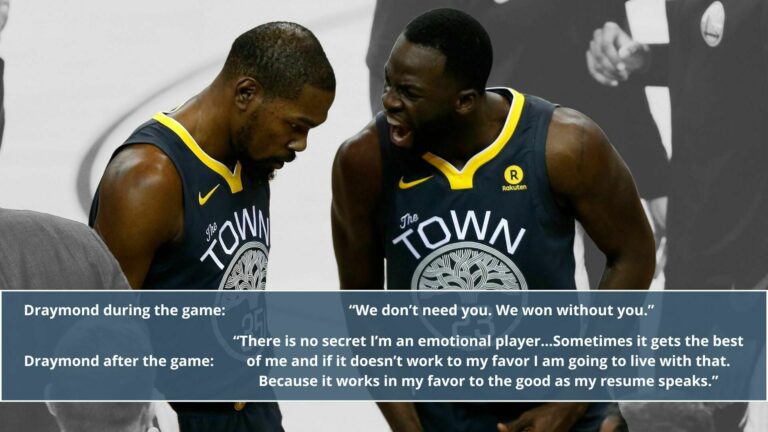
In November 2018, during a regular season game between the Golden State Warriors and the Los Angeles Clippers, tensions boiled over. Late in the game, Draymond Green secured a rebound and pushed the ball up the floor. Kevin Durant was calling for it. Draymond didn’t pass, lost control, and the Warriors missed their final shot. On the bench, the argument escalated.
Draymond said what many competitors think, but rarely say out loud: “We don’t need you. We won without you.”
Draymond went too far… too personal. He was suspended for one game. Months later, KD left the team.
A Strength That Wins
Draymond’s high aggression and competitiveness are not flaws. It makes him who he is. It fuels his defense, drives his leadership, pushes his teammates, and raises standards.
At its best, aggression creates urgency and accountability. It demands more. The Warriors don’t win championships without it.
A Strength That Hurts
But that same aggression, when unchecked, crosses a line. What can push performance, can become too personal. What can build accountability, can erode trust. What can elevate the team, can isolate individuals.
Draymond’s aggression helped win championships, but it may have played a major role in losing one.
The Other Side
With Draymond, and many others, we often focus on the impact of high aggression. But too little aggression can be just as costly.
Think about the teammate who sees the issue but doesn’t say anything. The employee who notices the inefficiency but stays quiet. The leader who avoids the hard conversation to keep the peace.
Standards drop. Problems linger. Frustration builds quietly. Without assertiveness, insight never becomes impact.
Calibrating Aggression
The goal isn’t to remove aggression, but refine it. To calibrate it.
And to understand that what makes you effective… can also make you ineffective.